India’s Apprenticeship Rules Revised for Viksit Bharat@2047
MSDE revises Apprenticeship Rules 1992 with higher stipends, digital apprenticeships, wider industry coverage & inclusivity under Viksit Bharat@2047.
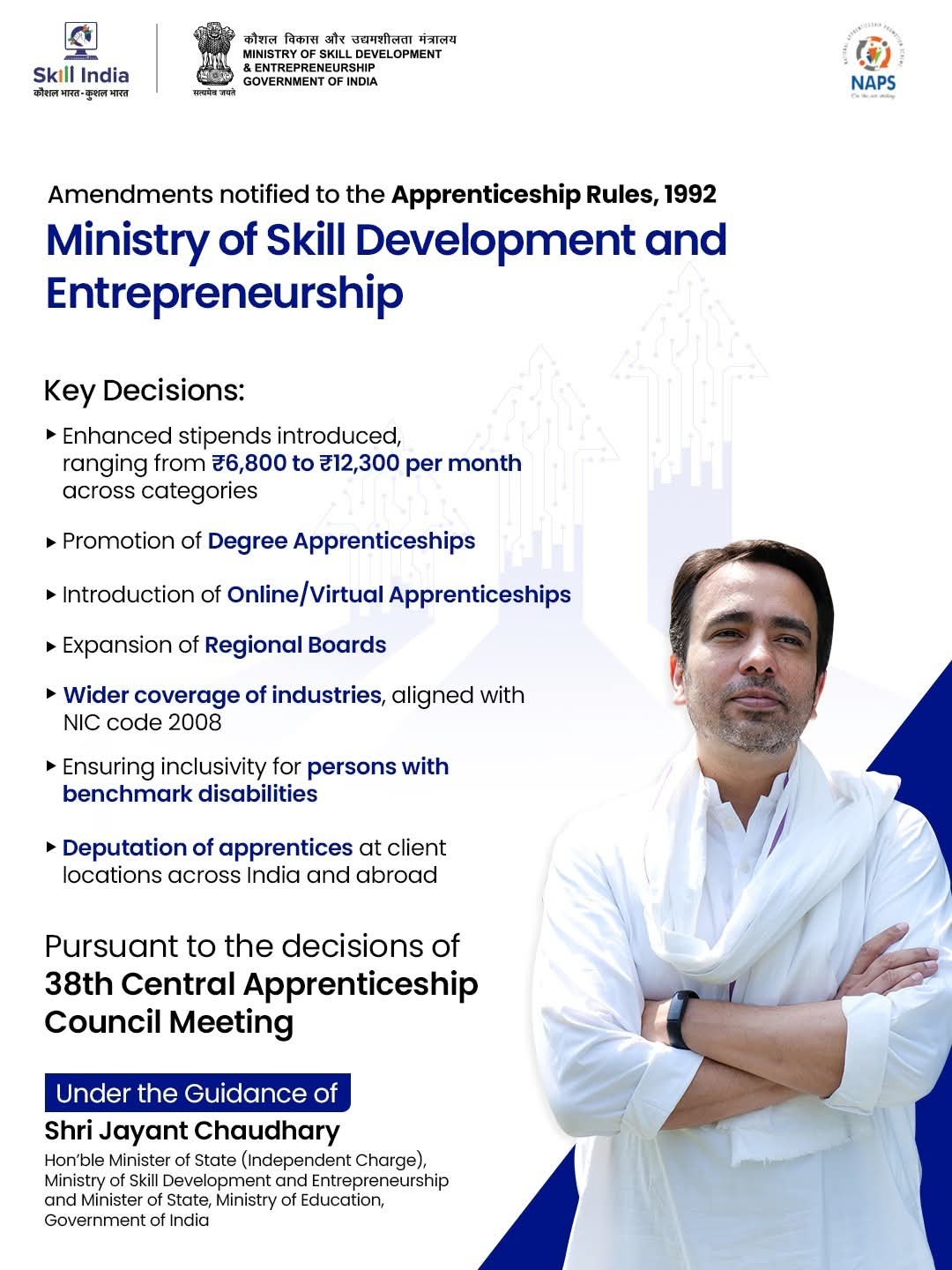
New Delhi: Pursuant to the decisions taken at the 38th meeting of the Central Apprenticeship Council, chaired by Shri Jayant Chaudhary, Hon’ble Minister of State (Independent Charge) for Skill Development & Entrepreneurship and Minister of State for Education, the Ministry of Skill Development & Entrepreneurship (MSDE) has notified significant amendments to the Apprenticeship Rules, 1992.
These landmark reforms are aimed at further strengthening India’s skilling ecosystem and making apprenticeships more attractive, inclusive, and rewarding for youth and industry alike.
Key Highlights of the Reforms:
Enhanced Stipends: Apprentices will now receive improved stipends ranging from ₹6,800 to ₹12,300 per month, depending on the category.
Promotion of Degree Apprenticeships: Integration of higher education with practical training, bridging the gap between academia and industry.
Online/Virtual Apprenticeships: Enabling digital and remote apprenticeship opportunities in alignment with emerging work models.
Expansion of Regional Boards: To ensure wider and more effective implementation across states and regions.
Wider Industry Coverage: Inclusion of more sectors in line with the National Industrial Classification (NIC) 2008.
Inclusivity for Persons with Disabilities: Ensuring equitable access and opportunities for persons with benchmark disabilities.
Speaking on the occasion, Shri Jayant Chaudhary emphasized, “These reforms reflect our commitment to empowering India’s youth with future-ready skills, while also addressing industry’s need for a robust and adaptive workforce. With enhanced stipends, digital pathways, and inclusive frameworks, apprenticeships will become a stronger driver for employment and productivity under Viksit Bharat@2047.”
The amendments mark a major step forward in making apprenticeships the preferred choice for skill development and career progression, aligning with India’s vision of becoming a global hub for talent, innovation, and inclusive growth.