Why Basic Computer Skills Are More Important Than Degrees in Today’s Job Market
In today’s job market, computer skills define employability. Degrees matter, but practical digital knowledge now decides career success for young professionals.
“A perspective from IACT Education on skill-based employability”
In today’s fast-changing world, the meaning of education and employment is rapidly evolving. For decades, a college degree was considered the ultimate key to success. Parents invested their savings, students chased marks, and society measured intelligence by certificates. But the reality of today’s job market tells a different story—basic computer skills now matter more than degrees.

The Shift from Degrees to Skills
Employers today are not only asking what have you studied?—they are asking what can you do? A graduate who cannot draft an email, manage Excel data, or operate online systems often struggles in the workplace. Meanwhile, a student with basic computer knowledge—MS Office, internet usage, digital communication, and simple data handling—finds opportunities faster, even without a high-level degree.
From private companies to government offices, the demand has shifted from theoretical knowledge to practical, day-to-day computer skills. Degrees may open the door, but skills decide how far one can go.
Computer Skills in Everyday Work Life
Today, almost every job involves computers in some form:
- Office assistants manage reports and data using Excel
- Customer care executives work on CRM software
- Teachers prepare digital content and online assessments
- Small business owners use billing software and online payments
- Government job aspirants fill online forms, download admit cards, and check results digitally
Without basic computer skills, even a well-qualified candidate feels lost. This is why employers often prefer a skilled person over a highly educated but untrained one.
Why Youth Must Rethink Career Preparation
Indian youth, especially from semi-urban and rural areas, face a tough reality. Many complete graduation but remain unemployed due to lack of practical skills. The problem is not intelligence—it is skill gap.
Basic computer education empowers youth to:
- Apply for jobs confidently
- Work efficiently in offices
- Explore freelancing and online income options
- Start small digital businesses
- Stay relevant in a technology-driven world
In fact, many entry-level jobs today require only basic education but strong computer handling skills.
Government Jobs & Digital Dependence
Even government sectors are no longer paperwork-based. Exams, registrations, documentation, and communication have moved online. From banking to railways, from education to healthcare—digital literacy is mandatory.
A candidate who cannot operate a computer is automatically at a disadvantage, regardless of academic performance. This makes computer skills a survival requirement, not an optional add-on.
Degrees Still Matter—but Skills Matter More
This does not mean degrees have no value. Education builds thinking, discipline, and knowledge. However, without skills, degrees remain incomplete.
The ideal youth of today is one who combines:
- Basic education
- Strong computer skills
- Continuous learning mindset
Such a combination ensures employability, adaptability, and long-term growth.
The Way Forward for Youth
To stay competitive, youth must:
- Learn basic computer operations early
- Master tools like MS Word, Excel, Email, and Internet usage
- Understand digital platforms and online safety
- Continuously upgrade skills as technology evolves
Institutions, training centers, and policymakers must also focus on skill-based education, making computer literacy accessible and affordable for all.
Role of IACT Education in Skill-Based Learning
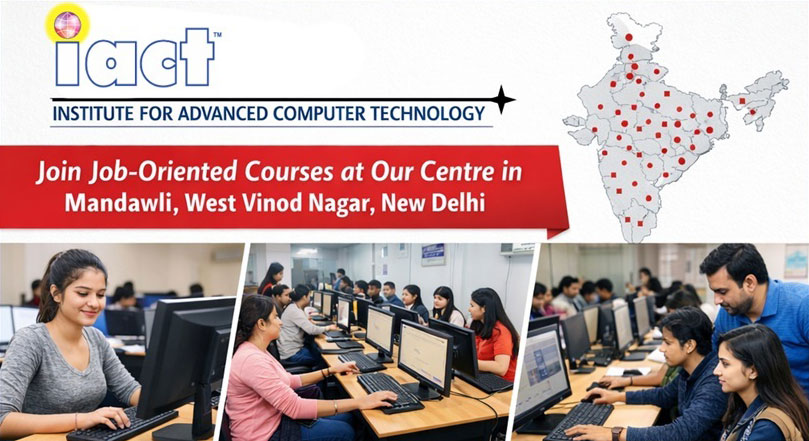
Recognizing the urgent need for practical computer education, IACT Education has been working consistently to bridge the gap between academic learning and industry requirements. With a strong focus on hands-on training, job-oriented computer courses, and affordable skill programs, IACT Education empowers youth from urban as well as rural backgrounds.
IACT’s training approach emphasizes real-world computer usage—office tools, digital communication, data handling, and emerging technologies—ensuring students are not only educated but also employable.
Conclusion
In the modern job market, computer skills have become the new literacy. Degrees may decorate a resume, but skills define success. For today’s youth, learning computers is not about technology—it is about confidence, independence, and survival in a digital world.
Institutions like IACT Education play a crucial role in shaping a skilled, self-reliant generation by making quality computer education accessible to all.
The future belongs not to the most qualified, but to the most skilled.